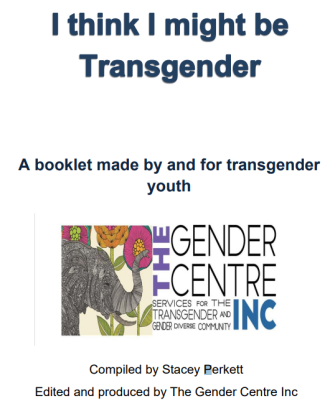
I think I might be transgender: a booklet made by and for transgender youth

A 22 page booklet that covers topics including what it means to be transgender and other questions such as 'What does it mean to be transgender" and "Am I normal".

Agency: The Gender Centre Inc.

Year of publication:

Where to get a hard copy:

Where to download: https://gendercentre.org.au/resources/support/youth?download=970:youth-booklet 

Go

'Is it like one of those infectious kind of things?' The importance of educating young people about HPV and HPV vaccination at school (2017)

The HPV vaccination program in Australia commenced in 2007 for girls and 2013 for boys. Students at school receive little or no education about HPV or HPV vaccination prior to immunisation. This trial conducted an intervention in schools to improve knowledge, psycho-social outcomes and vaccination uptake.

Go

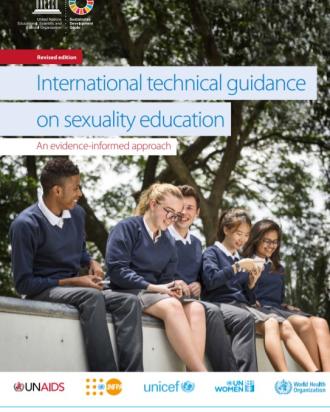
International technical guidance on sexuality education: an evidence informed approach (2018)

This resource is based on a rigorous review of evidence on sexuality education programs and is aimed at education and health sector decision-makers and professionals. This revised edition updates the 2009 guidance and was commissioned by the United Nations Education, Scientific and Cultural Organisation (UNESCO). The technical guidance includes key concepts, topics and learning objectives to teach each age group and outlines the key issues affecting children and young people's health and well-being.

Go

Increasing the resilience of young people at risk: A literature review (2009)

This report provides an analysis of a literature review focusing on what works to increase resilience for at-risk and marginalised young people. It forms part of a larger body of work that the NSW Centre for the Advancement of Adolescent Health (NSW CAAH) undertook, in partnership with NSW Health, towards developing the 2011-2016 Youth Health Policy for NSW. [PDF 1.8MB. Opens in new window]

Go

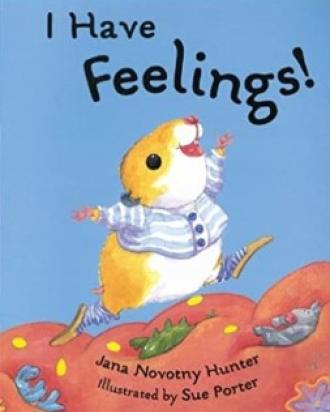
I have feelings!

Topics: feelings, emotions, emotional literacy.


Fiction


A hamster describes the feelings he and his family members experience during the day, including feeling happy, sad, jealous, angry, and scared.


Ages: 4 to 8 years.

YouTube reading 4min 05sec (external link)


Hunter, Jana Novotny. I have feelings!. New York: Mondo Publishing, 2002.
ISBN: 9781590341964

Go

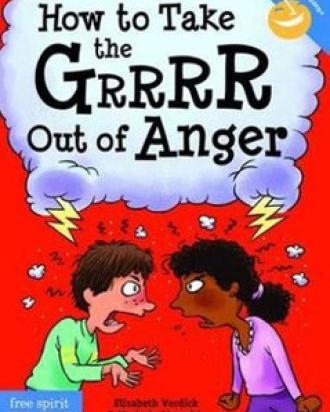
How to take the grrr out of anger

Topics: emotional literacy, anger, coping strategies.


Non-fiction


This book combines information, jokes and funny cartoons to help children understand that anger is normal and can be expressed in many ways—some healthy, some not. It teaches them how to recognise anger in themselves and others, how to handle situations and emotions (loneliness, guilt, frustration, fear) that lead to anger, and how to deal with the anger they feel.


Ages: 8 to 11 years.

How to be a friend: A guide to making friends and keeping them

Topics: friendships, conflict resolution, emotional literacy.


Fiction


This picture book contains many examples of how to be a friend and offers kids practical suggestions about resolving arguments, getting over being shy, handling bossy children and bullies, and more.


Agers 4 to 8 years.


Brown, Laurene Krasny and Marc Brown. How to be a friend: A guide to making friends and keeping them. New York: Little, Brown Books for Young Readers, 2001.
ISBN: 9780316111539

Have a question?

Email the GDHR Team at gdhr@health.wa.gov.au

Contact Us