Top tips from Talk soon. Talk often.

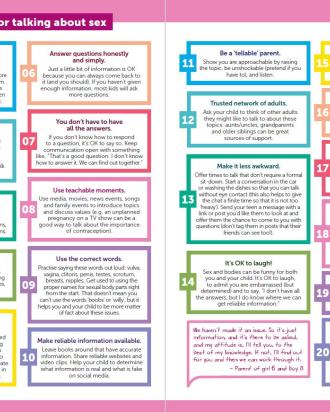
Top 20 tips for talking to kids about relationships and sexuality and the top 10 reasons why we must talk soon and often.

An A4 flyer that outlines the tips included in the Talk soon. Talk often book on page 10-11 and 76-77. 

For free bulk ofers (only available to WA addresses)

Free bulk orders can be made via www.dohquickmail.com.au. Please register with an organisational email (gmail and hotmail are not accepted through this automated system). 

Go

Everything a teen should know about the HPV vaccine

Human papilloma virus (HPV) vaccine - Secondary School Immunisation Program (12-13 year olds)

Online video by Cancer Council Victoria - 4min 13 sec

Content

Students talking about:

  • what HPV is
  • what the vaccine does
  • why you should have the vaccine
  • what to do if you miss a dose
  • safety of the vaccine
  • success rate of the vaccine.

NB: the video mentions 3 doses/needles - it is now only 2 doses/needles

Go

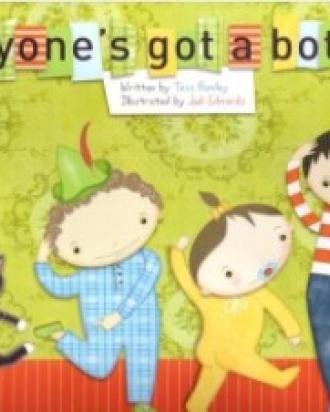
Everyone's got a bottom

Picture book


29 pages


A tool to start conversations about public and private body parts, introducing the concept of protective behaviours. Written in a light and positive tone.


Ages: 3 - 8 years


Rowley, Tess. Everyone's got a bottom. Brisbane: Family Planning Queensland, 2007. ISBN: 9780957912960


Youtube online reading (external link)


Cath Hak review (external link)

Go

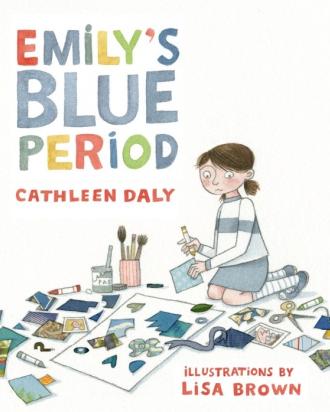
Emily's blue period

Topics: emotional literacy, sadness, change, families, divorce


Fiction


Emily wants to be an artist. She likes painting and loves the way artists like Pablo Picasso mixed things up. Emily's life is a little mixed up right now. Her dad doesn't live at home anymore, and it feels like everything around her is changing. She is going through her 'blue period'. A book about a young child dealing with her parent's divorce.


Ages: 4 to 8 years.


Daly, Cathleen. Emily's blue period. New York: Roaring Brook Press, 2014.
ISBN: 9781596434691
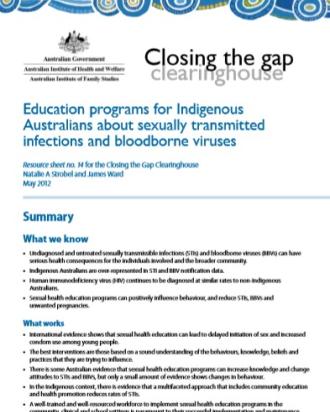
Education programs for Indigenous Australians about sexually transmitted infections and blood-borne viruses (2013)

As a group, Aboriginal and Torres Strait Islander people experience higher rates of sexually transmitted infections, blood-borne viruses, and teen pregnancy than non-Aboriginal and Torres Strait Islanders. This resource sheet examines evidence on the effectiveness of sexual health education programs for Aboriginal and Torres Strait Islander people. It outlines what works, what doesn't, and what further research is needed.

Go

Have a question?

Email the GDHR Team at gdhr@health.wa.gov.au

Contact Us