Image


__TwigTemplate_3734fffb3ad977906ea607e799cc7fde->doDisplay(Array, Array) (Line: 394)
Twig\Template->displayWithErrorHandling(Array, Array) (Line: 367)
Twig\Template->display(Array) (Line: 100)
__TwigTemplate_51804ed58c85ac49f262da878d163eb0->doDisplay(Array, Array) (Line: 394)
Twig\Template->displayWithErrorHandling(Array, Array) (Line: 367)
Twig\Template->display(Array) (Line: 379)
Twig\Template->render(Array) (Line: 38)
Twig\TemplateWrapper->render(Array) (Line: 39)
twig_render_template('modules/contrib/better_exposed_filters/templates/bef-links.html.twig', Array) (Line: 348)
Drupal\Core\Theme\ThemeManager->render('bef_links', Array) (Line: 480)
Drupal\Core\Render\Renderer->doRender(Array) (Line: 493)
Drupal\Core\Render\Renderer->doRender(Array, ) (Line: 240)
Drupal\Core\Render\Renderer->render(Array) (Line: 475)
Drupal\Core\Template\TwigExtension->escapeFilter(Object, Array, 'html', NULL, 1) (Line: 51)
__TwigTemplate_831e1f6c7a86d0986ecd0357aecb3486->doDisplay(Array, Array) (Line: 394)
Twig\Template->displayWithErrorHandling(Array, Array) (Line: 367)
Twig\Template->display(Array) (Line: 379)
Twig\Template->render(Array) (Line: 38)
Twig\TemplateWrapper->render(Array) (Line: 39)
twig_render_template('themes/contrib/bootstrap5/templates/views/views-exposed-form.html.twig', Array) (Line: 348)
Drupal\Core\Theme\ThemeManager->render('views_exposed_form', Array) (Line: 480)
Drupal\Core\Render\Renderer->doRender(Array, ) (Line: 240)
Drupal\Core\Render\Renderer->render(Array) (Line: 475)
Drupal\Core\Template\TwigExtension->escapeFilter(Object, Array, 'html', NULL, 1) (Line: 84)
__TwigTemplate_c83289cca6c46c7616c493a7b5845206->doDisplay(Array, Array) (Line: 394)
Twig\Template->displayWithErrorHandling(Array, Array) (Line: 367)
Twig\Template->display(Array) (Line: 379)
Twig\Template->render(Array) (Line: 38)
Twig\TemplateWrapper->render(Array) (Line: 39)
twig_render_template('themes/custom/gdhr/templates/views/views-view.html.twig', Array) (Line: 348)
Drupal\Core\Theme\ThemeManager->render('views_view', Array) (Line: 480)
Drupal\Core\Render\Renderer->doRender(Array) (Line: 493)
Drupal\Core\Render\Renderer->doRender(Array, ) (Line: 240)
Drupal\Core\Render\Renderer->render(Array) (Line: 475)
Drupal\Core\Template\TwigExtension->escapeFilter(Object, Array, 'html', NULL, 1) (Line: 81)
__TwigTemplate_d948d97f9d70763f4f401578b739cccc->block_content(Array, Array) (Line: 171)
Twig\Template->displayBlock('content', Array, Array) (Line: 68)
__TwigTemplate_d948d97f9d70763f4f401578b739cccc->doDisplay(Array, Array) (Line: 394)
Twig\Template->displayWithErrorHandling(Array, Array) (Line: 367)
Twig\Template->display(Array) (Line: 379)
Twig\Template->render(Array) (Line: 38)
Twig\TemplateWrapper->render(Array) (Line: 39)
twig_render_template('themes/contrib/bootstrap5/templates/block/block.html.twig', Array) (Line: 348)
Drupal\Core\Theme\ThemeManager->render('block', Array) (Line: 480)
Drupal\Core\Render\Renderer->doRender(Array) (Line: 493)
Drupal\Core\Render\Renderer->doRender(Array, ) (Line: 240)
Drupal\Core\Render\Renderer->render(Array) (Line: 475)
Drupal\Core\Template\TwigExtension->escapeFilter(Object, Array, 'html', NULL, 1) (Line: 53)
__TwigTemplate_c3a244c4f94e4a80aa9ba477a3e3870e->doDisplay(Array, Array) (Line: 394)
Twig\Template->displayWithErrorHandling(Array, Array) (Line: 367)
Twig\Template->display(Array) (Line: 379)
Twig\Template->render(Array) (Line: 38)
Twig\TemplateWrapper->render(Array) (Line: 39)
twig_render_template('themes/custom/gdhr/templates/layout/layout--onecol.html.twig', Array) (Line: 348)
Drupal\Core\Theme\ThemeManager->render('layout__onecol', Array) (Line: 480)
Drupal\Core\Render\Renderer->doRender(Array) (Line: 493)
Drupal\Core\Render\Renderer->doRender(Array) (Line: 493)
Drupal\Core\Render\Renderer->doRender(Array, ) (Line: 240)
Drupal\Core\Render\Renderer->render(Array) (Line: 475)
Drupal\Core\Template\TwigExtension->escapeFilter(Object, Array, 'html', NULL, 1) (Line: 110)
__TwigTemplate_e3a67e8fdc4292327964349c2380cb70->doDisplay(Array, Array) (Line: 394)
Twig\Template->displayWithErrorHandling(Array, Array) (Line: 367)
Twig\Template->display(Array) (Line: 379)
Twig\Template->render(Array) (Line: 38)
Twig\TemplateWrapper->render(Array) (Line: 39)
twig_render_template('themes/contrib/bootstrap5/templates/content/node.html.twig', Array) (Line: 348)
Drupal\Core\Theme\ThemeManager->render('node', Array) (Line: 480)
Drupal\Core\Render\Renderer->doRender(Array, ) (Line: 240)
Drupal\Core\Render\Renderer->render(Array, ) (Line: 238)
Drupal\Core\Render\MainContent\HtmlRenderer->Drupal\Core\Render\MainContent\{closure}() (Line: 627)
Drupal\Core\Render\Renderer->executeInRenderContext(Object, Object) (Line: 231)
Drupal\Core\Render\MainContent\HtmlRenderer->prepare(Array, Object, Object) (Line: 128)
Drupal\Core\Render\MainContent\HtmlRenderer->renderResponse(Array, Object, Object) (Line: 90)
Drupal\Core\EventSubscriber\MainContentViewSubscriber->onViewRenderArray(Object, 'kernel.view', Object)
call_user_func(Array, Object, 'kernel.view', Object) (Line: 111)
Drupal\Component\EventDispatcher\ContainerAwareEventDispatcher->dispatch(Object, 'kernel.view') (Line: 186)
Symfony\Component\HttpKernel\HttpKernel->handleRaw(Object, 1) (Line: 76)
Symfony\Component\HttpKernel\HttpKernel->handle(Object, 1, 1) (Line: 58)
Drupal\Core\StackMiddleware\Session->handle(Object, 1, 1) (Line: 48)
Drupal\Core\StackMiddleware\KernelPreHandle->handle(Object, 1, 1) (Line: 28)
Drupal\Core\StackMiddleware\ContentLength->handle(Object, 1, 1) (Line: 32)
Drupal\big_pipe\StackMiddleware\ContentLength->handle(Object, 1, 1) (Line: 191)
Drupal\page_cache\StackMiddleware\PageCache->fetch(Object, 1, 1) (Line: 128)
Drupal\page_cache\StackMiddleware\PageCache->lookup(Object, 1, 1) (Line: 82)
Drupal\page_cache\StackMiddleware\PageCache->handle(Object, 1, 1) (Line: 48)
Drupal\Core\StackMiddleware\ReverseProxyMiddleware->handle(Object, 1, 1) (Line: 51)
Drupal\Core\StackMiddleware\NegotiationMiddleware->handle(Object, 1, 1) (Line: 36)
Drupal\Core\StackMiddleware\AjaxPageState->handle(Object, 1, 1) (Line: 51)
Drupal\Core\StackMiddleware\StackedHttpKernel->handle(Object, 1, 1) (Line: 704)
Drupal\Core\DrupalKernel->handle(Object) (Line: 19)
Introduction
Pellentesque habitant morbi tristique senectus et netus et malesuada fames ac turpis egestas.
Curabitur cursus arcu quis lorem vehicula ornare. Cras pharetra at leo ut tempus. Suspendisse felis neque, fringilla et imperdiet non, malesuada eget neque. Proin lobortis lacus magna, nec consequat purus lobortis at. Proin mattis nibh sit amet elementum bibendum. Nunc iaculis augue sit amet metus tempus condimentum. Pellentesque habitant morbi tristique senectus et netus et malesuada fames ac turpis egestas.
In the past, young people have typically come across or looked for sexually explicit material in the form of photographs...
In the past, young people have typically come across or looked for sexually explicit material in the form of photographs, books and magazines. However, with phones and other devices making the internet so readily accessible, sexually explicit material is now even more available, easily accessible, cheap, and quick. Many young people are exposed to a culture saturated with sexualised images that are not easily controlled by parents or schools and can readily view pornography without age-related barriers.
Pornography is generally described as being any sexually explicit materials intended to create arousal in the consumer.
Accessing and viewing sexually explicit material is now common among young people, especially boys.1 The types of pornography available on the internet ranges from mild to grossly offensive and illegal, and comes in the form of sexual pictures, writing, photos, videos, or chatroom talk.
One study found 28% of Australian 11-16-year olds have seen sexual images online. Of these, 24% say they have seen online sexual images including nudity, 17% have seen someone’s genitals online, 16% (more teenagers than young children) have seen images of someone having sex, and 6% say they have seen violent sexual images.2
Exposure to pornography is not always voluntary, with ads promoting porn sites often arising as ‘pop-ups’; and many girls report experiencing the incidence of involuntary exposure. Males appear to be more likely to use pornography, to view it alone and to become sexually aroused by its content.3
Some studies have suggested that viewing pornography can assist same-sex attracted, questioning young people to develop a positive sense of identity and sexual confidence.4
However, pornography is considered to be an extremely poor and generally inappropriate method of sexuality education for young people, especially men. Some research has suggested that viewing pornography may be linked with young men having ‘aggressive’ views towards girls.4
Having some basic knowledge and understanding about the physical aspects of how bodies function in terms...
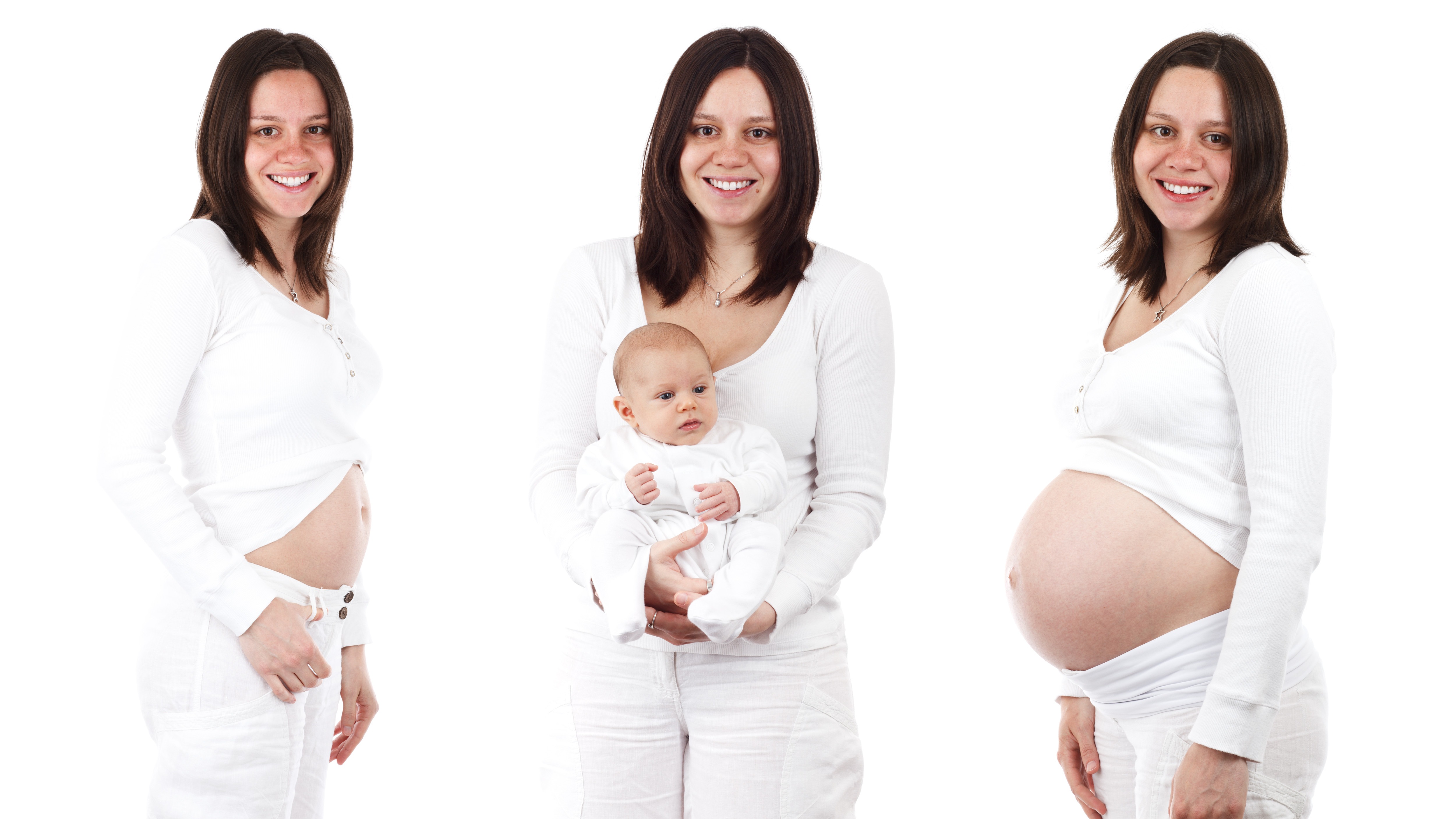
Having some basic knowledge and understanding about the physical aspects of how bodies function in terms of pregnancy and human reproduction will provide students with a foundation for good decision-making about their current and/or future sexual health behaviours. Students may also be generally interested to learn about the creation of human life.
Teaching about pregnancy involves the biological (physiological) knowledge...
Teaching about pregnancy involves the biological (physiological) knowledge (see background notes on Pregnancy and birth: A brief overview of biology and physiology) as well as exploration about the relevance of pregnancy to the lives and relationships of adolescent and older students. Abstinence and delaying sexual intercourse is important to discuss, however there is a clear imperative to consider contraception and safer sex given their relevance to the choices, circumstances and experiences of all young people (see Safer sex and contraception background teacher note).
Recent Australian research provides good information about young people and their sexual health. The 5th National Survey of Australian Secondary Students and Sexual Health1 found that:
More than half of all teenage pregnancies in Australia occur in the first 6 months of a young person starting to have sexual intercourse.
No data is given here about the numbers of termination of pregnancies in teenage girls but suffice to say, it is far too high.
Providing young people with the knowledge and understanding about pregnancy can go some way to help prevent unwanted pregnancies.
The vast majority of abused children (96%) are abused by someone known and trusted by them.
The vast majority of abused children (96%) are abused by someone known and trusted by them1. Research suggests that in Australia, 1 in 4 girls and somewhere between 1 in 7 boys and 1 in 12 boys are sexually abused before they reach the age of 182, but only a small proportion will ever tell of their abuse3.
Protective behaviours education focuses on developing the skills of empowerment, communication, self-esteem, resilience, social skills and other life skills to prevent abuse, reduce violence and promote life-enriching rather than life-depleting experiences. It encourages students to:
In Western Australia, teachers are required by law to report a belief, formed on reasonable grounds in the course of their work, that a child or young person has been the subject of sexual abuse to the WA Department for Child Protection and Family Support. See the WA Department of Education's Child Protection website for further details.
The word 'puberty' is derived from the Latin word pubertas, meaning adulthood. It is the transition period...
The word 'puberty' is derived from the Latin word pubertas, meaning adulthood. It is the transition period that takes a person from being a sexually immature child to a sexually mature adult. It usually involves a growth spurt, appearance of secondary sex characteristics, reproductive fertility and profound psychological changes. The pace of this growth and change are second only to that of infancy. The ages at which these changes begin, and their rate of growth, vary enormously.
Personal hygiene can be described as the principle of maintaining cleanliness and grooming of the external body. It is looking after yourself and your body to maintain health.
Personal hygiene is important for personal, social, psychological and emotional reasons. It helps prevent infections and the spread of disease, illness and body odour. Good personal hygiene can also have a positive impact on self-esteem, confidence and body image.
Personal hygiene is particularly important during puberty as the body begins to produce more hormones that can increase the amount of sweat, oil and odour the body produces.
The following things are essential to maintain optimum health:
The female reproductive and sexual anatomy includes the external and internal sex organs, such as the vulva and vagina, and the internal reproductive organs, such as the ovaries and uterus. The female reproductive system produces hormones, which help a girl develop into a sexually mature woman during puberty. Females also use these organs to produce and release eggs which, when fertilised by a male's sperm, grow into a baby in the uterus.
The male reproductive and sexual anatomy includes the external and internal sex organs, such as the penis and testes, and the internal reproductive organs, such as the urethra and seminal vesicle. The male reproductive system produces hormones, which help a boy develop into a sexually mature man during puberty. Males also use these organs to produce and release semen into the reproductive system of a female during sexual intercourse where it can fertilise an egg.
There are many different kinds of relationships - acquaintances, friends, best friends, family, companions, romantic, sexual, intimate. Relationships can be between people from different countries, different cultures, the same gender or another gender. They can be can be long-term and last a lifetime, or they can be short-term. The level of contact and connection also differs. The one thing that remains constant is the need for respect - being respectful and being respected. As teachers, we value respect enormously. We hope that our students will respect us, that they will respect others and that they will respect themselves. We also hope that they will be respectful of their belongings, the environment and the law.
Nam vitae blandit felis. Cras mollis faucibus ipsum ac tempor. Duis ut dignissim sapien.
Nam vitae blandit felis. Cras mollis faucibus ipsum ac tempor. Duis ut dignissim sapien. Nunc blandit, orci nec volutpat consectetur, risus mauris dictum massa, in mattis ligula purus ut tellus. Donec efficitur est vel nisi auctor, vel interdum diam malesuada.